



Find Your Shade: Size and Space - with Jono Fleming

We asked Sydney-based interior designer, stylist and author Jono Fleming how the same design thinking that shapes a well-loved home applies to the smallest outdoor spaces. Turns out good design advice works just as well at 4 square metres as it does at 400.

basil bangs jono fleming interior spaces

There is a certain type of outdoor space that gets treated as an afterthought. Not quite inside, not quite designed. A table. Some chairs. Maybe a dying succulent. Something that says: we ran out of ideas at the door.

It's more common than you'd think and more fixable than you'd expect.

Jono Fleming has built a career helping people understand that a beautiful, personal home doesn't require a big budget or a lot of square metres. It requires intention. His debut book, A Visual Feast, breaks that down into eight design elements: space, light, texture, layers, colour, story, culture and pattern. Great design isn't one thing; it's a combination that feels right for the person living there.

We asked him whether that thinking holds up when you step outside.

basil bangs jono fleming interior spaces

Your philosophy is that interior style is about telling your own personal story. How do you see that extending into outdoor spaces?

Outdoor spaces should feel like an extension of the home, not a separate thing. People often focus on the practical stuff outdoors; a table, some chairs, a barbecue but I think the same principles apply inside and out. The best spaces reflect the people who live there.

I always think about how someone is actually going to use the space. Is it where they have their morning coffee? Read a book on a Sunday afternoon? Have friends over for a drink? Once you start thinking about it that way, it becomes much easier to make even a tiny balcony or courtyard feel personal.

basil bangs jono fleming interior spaces

In your book A Visual Feast, you break design down into elements like light, texture and story. How could people adopt those elements in their own apartments?

The whole premise of the book is that there isn't just one ingredient that makes a beautiful home. Some people are naturally drawn to colour. Others collect art. Others create warmth through texture and materials. What makes a home feel expressive is finding the combination that feels authentic to you, rather than trying to recreate somebody else's version of good design.

basil bangs jono fleming interior spaces

A lot of people default to neutral palettes because it feels 'safe'. What would you say to someone who wants to be bolder but doesn't know where to start?

I always laugh because I'm the designer constantly telling everyone to paint their walls colours, but my own home has white walls. But colour doesn't have to just come from paint. It can come from furniture, artwork, books, plants and accessories.

If you're nervous, start small. Add a colourful umbrella, some cushions or a planter you love and see how it feels. The best homes are colourful because the people living in them genuinely love those colours, not because it was fashionable at the time.

How do you think about an umbrella as a design element rather than just a functional item?

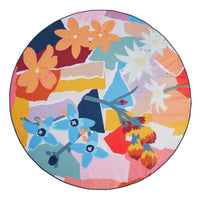
An umbrella is often one of the biggest things in the space, so it's impossible not to think about it as part of the design. It's a bit like choosing a sofa indoors, it takes up a lot of visual real estate.

I always look at scale first. If it's too small, it can feel a bit mean. Then I think about colour and pattern. A great umbrella doesn't just provide shade; it creates atmosphere.

What's one thing people could do this weekend, with what they already have, to make their outdoor space feel fresh?

I'd probably start by editing. Most people think they need to buy something new, but often the quickest way to improve a space is to remove half the stuff in it. Clear the clutter, move things around, borrow a few cushions from inside and style it as intentionally as you would your living room. You'd be amazed how different a space can feel without spending a single dollar.

When you're renting, it can be hard to invest in an outdoor space. Any low-cost, high-impact changes?

Plants would have to be number one. A few well-placed plants can soften an ugly balcony, create privacy and make the whole space feel more alive. After that, I'd focus on textiles. Cushions and outdoor rugs instantly make a space feel more comfortable and considered.

I think renters sometimes assume there's no point investing in a space they don't own. But you're still the one living there every day so why not make it somewhere you actually enjoy spending time?

3 quick thoughts from Jono

A small outdoor space should always feel... connected to the home around it.

His one-line rule...
Treat it like a room, not a leftover space.

For the person who thinks their balcony is too small...
Small spaces often have more personality because every decision matters.

Images courtesy of Jono Fleming
Photography by Jacqui Turk

by Li-Ann Scott

Keywords
Similar Read
Commercial
How to: Look after outdoor fabrics
Read More
Basil Projects
Felons Brewing Co. Manly
Read More